In ancient times cloth weaving requires a lot of skills and patience due to the time consumption, because of that only few or intellectuals can handle that profession, others tends to use other means of body cover as dressing.
HAUSA’s are experts in cloth weaving, as early as 12th to 13th century Hausa people are known for cotton farming which grows well in the vast plans of Hausa land (especially in Funtua, Rano and Kano city state) with high abundance of raw materials makes cloth weaving easier.
Cotton and cotton fabrics was once a huge commodity in hausaland as its traded with many African empires of the time, such as Songhai, Empire, Tuaregs, etc.
Hausawa using their technical skills known as “Azanci” began to produce cotton fabrics in large quantities some for trading with other nation while some for use with in the Hausa community by the Hausas.
These clothes were beautifully coloured with different dyes as evidenced in so many locations of Hausa land one of which was kano dye pits in Kofar mata, which has been in existence from 1498 till date. The Tuaregs have been good customers of Hausa fabrics, because of their love to the colour blue they sometimes referred to as “blue men of the desert”.
Hausa men wear cloths that covers the neck down to the legs it’s called “Riga” “Tagguwa” the hands are usually elongated to cover the entire length of the hands some are armless suited for recreational purposes and “wando” trousers which is tied with “Zariya”.
These are followed with beautifully design caps to cover the head, the caps comes in different design specifying socio-economic class, prestige and maturity.
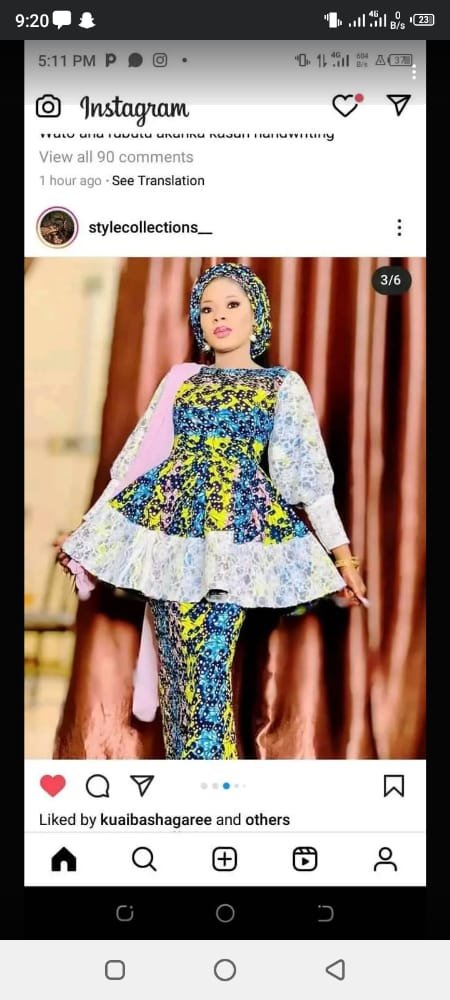
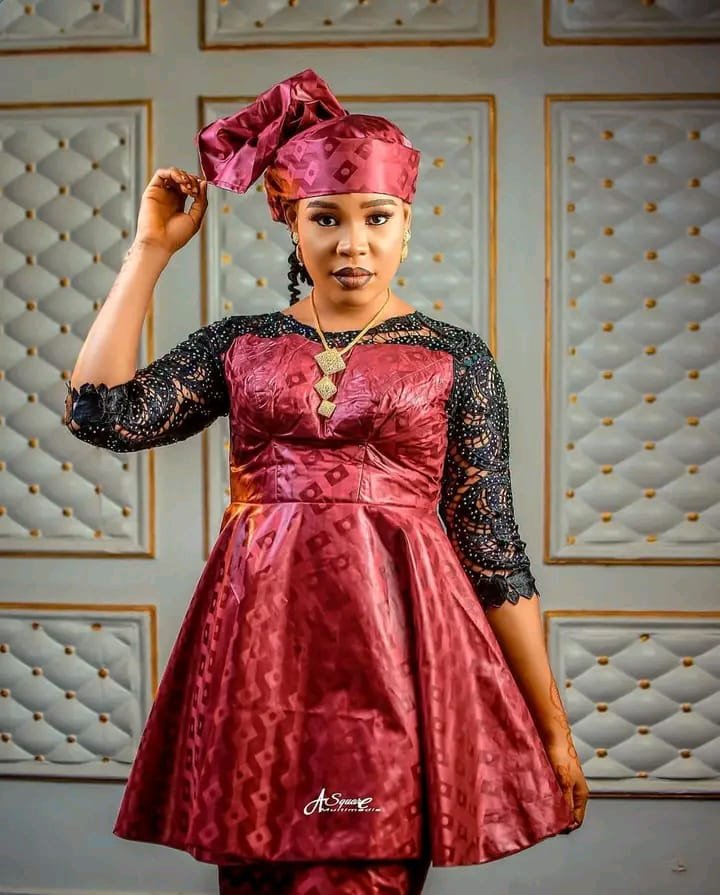
Then “Babban Riga” is also worn over for special occasion (such as marriage, a visit to in-laws, funerals etc.) and for the elderly sometimes as a show of maturity Hausa women wear women type of “Riga” and “Zanne” wrapper to cover the lower end, which is accompanied by “gyale” veil and “Dan Kwali” head tie.
These set of clothes comes in different colours, sizes, and different weaving style according to socioeconomic class and affordability of many clients.
As it’s a norm for Hausas many of their culture and language is easily accepted and circulated just like Hausa language, these is also the case for Hausa traditional designs which are used by many tribes in Northern Nigeria and many other parts of the African t.
According to an elderly Hausa woman, Hajiya Hussaina Musa residing in Tudun Wada, Kaduna said; “well many things has changed in the made of the Hausa women dressing compared to olden days and that of the present generation because in the olden days you wear the dress that will cover everything in your body in the sense that it will not show your shape or anything about the body” in those days she explained further that your clothe used to have two pair of rapper, a top with long sleeve then you will tie one and use the other as veil.
THAjiya Hussaina made mentioned of the things which include to show fashion in these days Murjani (beat) that was used on their neck and hand “we also used to have what we called awarwaro (bangles) used to decorate the hands. Then there was what we called kwalli (eye pencil) janbaki (lipstick) we also use the kwalli to decorate our face through making some dot in your chicks, on top of your nose.
She said for her the olden days fashion is more preferable because it was very decent and more beautiful. The cloths will comfort you and also brings the beauty in you unlike the present modern way of dressing that although it is also good and makes people to look more beautiful but it’s also to show the nakedness as well as the shape of the ladies.
The impact of the modern dressing in our society made our younger generation to detest the traditional and cultural way of dressing today in our society our girls prefer western dressing with many believing it is the best way to appear in public and look beautiful, even though must elders from at such dressing. They always urge or call on the younger ladies to be proud of their culture.
 Site Title